Indigenous Sovereignty
With the actions of land defenders continuing across Canada on the traditional, ancestral, unceded land of the Wet’suwet’en, we encourage all students, staff, and Faculty, particularly those who are non-Indigenous, to become informed of the historical, persistent, and systemic issues faced by Indigenous peoples throughout Canada.
Resources to Become More Informed
Indigenous Foundations
An information resource on key topics relating to the histories, politics, and cultures of the Aboriginal peoples of Canada.
UN CERD Response Statement
United Nations Committee on the Elimination of Racial Discrimination Response Statement to Canada’s Actions on Pipelines
Statement from the BC Human Rights Commissioner
BC Human Rights Commissioner Kasari Govender’s statement regarding the recent decision statement by the UN Committee for the Elimination of Racial Discrimination (CERD).
UNDRIP
United Nations Declaration on the Rights of Indigenous Peoples
MMIWG Report
Reclaiming Power and Place: The Final Report of the National Inquiry into Missing and Murdered Indigenous Women and Girls
TRC Reports
Truth and Reconciliation Commission reports, housed by the National Centre for Truth and Reconciliation.
The Unis’tot’en Camp
The Unis’tot’en (C’ihlts’ehkhyu / Big Frog Clan) are the original Wet’suwet’en Yintah Wewat Zenli distinct to the lands of the Wet’suwet’en.
First Peoples Law
Established as a vehicle for protecting and advancing the rights of the Indigenous Peoples of Canada through providing the highest quality legal services while actively participating in public education.
The Wet’suwet’en, Aboriginal Title, and the Rule of Law: An Explainer
Sheryl Lightfoot, Publications
List of publications by Sheryl Lightfoot, UBC Senior Advisor to the President on Indigenous Affairs; Canada Research Chair in Global Indigenous Rights and Politics; Associate Professor, First Nations and Indigenous Studies and Political Science
Relevant News Articles
The road to reconciliation starts with the UN Declaration on the Rights of Indigenous Peoples – The Conversation, 12 September 2019
The Wet’suwet’en are more united than pipeline backers want you to think – Macleans, 14 February 2020
Indigenous civil rights blockades should be met with a new diplomacy, not violence – The Conversation, 27 February 2020
UBC departmental Statements of Solidarity and Support, to-date:
Institute for Critical Indigenous Studies
Recognizing resilience and potential during Black History Month
By Gabrielle Bonifacio, Communications Assistant
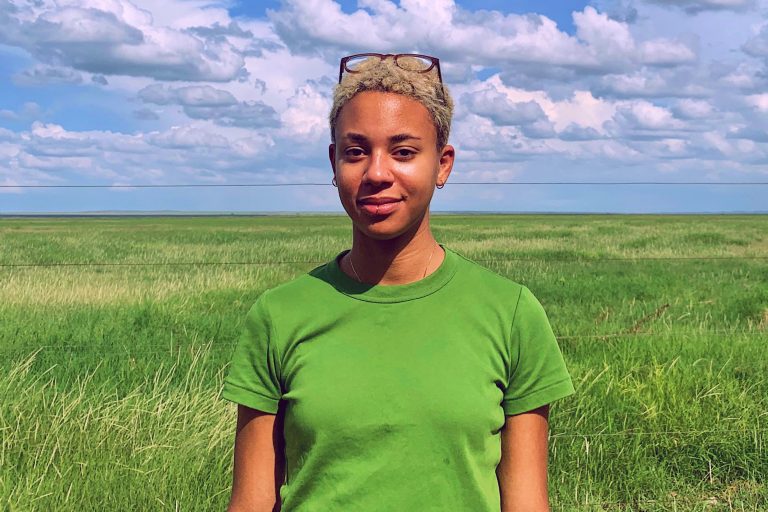
During Black History Month, we encourage everyone to celebrate and explore the countless achievements, contributions, and experiences of Black Canadians throughout history.
Though understanding Black history should not be limited to any single time frame, this month is a good place to start learning about and from notable figures who excelled in their fields and boldly strove for progress, such as Canadians Carrie Best, Lincoln Alexander, and Viola Desmond.
This February, we gathered the perspectives of students who are leading the change at UBC today. One of these leaders is Savannah Sutherland, the co-president of the Black Student Union (BSU). The BSU is a student group which fosters community, creates safe spaces, and advocates for issues relating to the Black community at UBC.
How do you celebrate Black History Month? What does it mean to you?
I only began celebrating Black History Month after the formation of the UBC Black Student Union just over a year ago. Due to the deliberate erasure of the Black community in Canada and especially in BC, for me, Black History Month at UBC is an opportunity for us to take up space, forcing people to recognize our existence, resilience, and potential.
How does your work on campus advocate against and bring awareness to anti-Black racism?
As Co-President of the UBC BSU, my personal goal is to create a space of undeniable love and support for Black students at UBC. However, the BSU’s mission also concerns representation among students, staff, and faculty, and advocacy for issues that pertain to the Black community at UBC. This includes the lack of Black counsellors, the lack of courses dealing with Blackness/African-ness and often subtle anti-Black racism that is exercised on campus.
Do you have any final thoughts on Black History Month that you would like to share with the campus community?
I love seeing the increased participation in Black History Month by departments at UBC. However, the lack of structural change makes much of it seem very performative. Blackness and Black history should not be relegated to the shortest month of the year. If UBC really cares about Black history, resources should be allocated to supporting the African Studies Minor at UBC. This means hiring more Black/African professors, giving tenure to current faculty, and offering enough courses so that existing professors are not forced to squeeze the entire history of the African continent into three months.
Celebrate Black History Month
By Gabrielle Bonifacio, Communications Assistant

With each coming year, we aspire to celebrate the achievements and contributions of Black Canadians while also gaining a wider understanding of the parts of history that have been erased.
Though it is now well-established that February is Black History Month, BHM was only officially recognized in Canada when the Honourable Jean Augustine, who was the first Black woman elected to Parliament, introduced the motion in 1995.
As Aisha Harris so astutely put it in her piece, “Let’s Fix Black History Month”, this is also an important time for us to “confront past and present injustices” and recognize the presence of anti-Blackness today to create a truly equitable and inclusive future.
This February, observe the month by channeling your inner bookworm, attending an event, or chiming in online using #blackhistorymonth.
Head out to an event
UBC Vancouver
- Black Activism in Education and Community: Exposing Anti-Black Racism in Vancouver with Shelby McPhee
- UBC Robson Square Theatre
- Decolonizing Voices: A Celebration of Canadian Black HERstory
- Great Hall and Haida House
- IBPOC Connections Staff & Faculty Lunch: Important Conversations
- St. John’s College
- Film Screening: Journey to Justice
- Chan Centre
- We Shall Overcome: A Celebration of Dr. Martin Luther King, Jr.
- Chan Centre
- Asserting Black Presence in Canada with OmiSoore Dryden
- UBC Robson Square HSBC Hall
Vancouver
- Black History Month Concert
- UCABC presents…BHM 2020: The Black Experience Expressed through the Arts
- Root
- The Black Market
- BLACK ARTS VANCOUVER PRESENTS: Movie Night
- Black History Month Family Day
- African Fashion and Arts Movement Vancouver 2020
- Black Love Series
- A Dialogue on Post Genocide Reconciliation Model
- Black Strathcona Heritage Tour & Fountain Chapel Celebration
- Blair Imani @ SFU
- Black History Month Lecture
Good reads
With a rich selection of classic and contemporary, poetry and prose books written by celebrated Black authors available in store or at your local library, there are countless options that are sure to satisfy every kind of reader. Here are a few gems that you should definitely add to your TBR pile.
- The Source of Self-Regard by Toni Morrison
- Reproduction by Ian Williams
- An American Marriage by Tayari Jones
- Becoming by Michelle Obama
- I’ve Been Meaning to Tell You by David Chariandy
- Let Me Hear a Rhyme by Tiffany D. Jackson
- The Fire Next Time by James Baldwin
- With the Fire on High by Elizabeth Acevado
- Between the World and Me by Ta-Nehisi Coates
- Long Way Down by Jason Reynolds
- The Autobiography of Malcolm X by Malcolm X
Want more? Head to the UBC Bookstore to check out their Black History Month book display.
Listen to Black voices
- Recognizing resilience and potential – meet Savannah Sutherland, the co-president of the Black Student Union (BSU).
IBPOC Staff & Faculty Lunch: Important Conversations
Looking to join and build a community for IBPOC staff and faculty? Join us for IBPOC Connections lunch – a social gathering for faculty and staff who self-identify as Indigenous, Black or as a Person of Colour (IBPOC).
Wrapping up 2019: Gratitude for this year’s gifts
By Gabrielle Bonifacio, Communications Assistant (Work-Learn), UBC Equity & Inclusion Office

Before we roar into 2020, let’s take a moment to reflect on this year’s highlights and thank everyone who helped make this year so bright.
From everyone at the office: thank you for your support, leadership and dedication to making UBC and wherever you go a more inclusive place. After all of the hard work you’ve done, we hope you have a happy and restful holiday!
UBC Vancouver’s year in review
Here are a few accomplishments we’re proud of:
- Working with Dr. Minelle Mahtani, the newly appointed Senior Advisor to the Provost on Racialized Facuty, to launch several ongoing series for racialized staff and faculty. The IGNITE Book Club’s first session featured celebrated author, David Chariandy. The Provost’s Distinguished Lecture Series on Race and Leadership welcomed acclaimed EDI scholar and educator, Dr. Damon A. Williams.
- Supporting Dr. Mahtani with Equity & Justice Work in the Canadian University, a three-part panel series at Congress 2019 which united scholars, practitioners and experts to explore equity work and institutional transformation at Canadian Universities.
- This month we had our first BIPOC Connections lunch, where racialized staff and faculty were given a space to share stories and break bread.
- Hosting an even bigger UBC Pride with an amazing turnout that demonstrated our commitment to celebrating diverse sexual orientations and gender identities on campus. We were also proud to see UBC community members marching at the Vancouver Pride Parade.
- Launching Through the Lens workshops, an engaging series on diverse issues led by experienced community leaders. The series will continue exploring how different identities navigate UBC while teaching participants how to create a more inclusive campus in the new year.
- Encouraging student engagement through Equity Ambassadors and the newly formed Equity Student Advisory Council (ESAC). Led by diverse students at UBC, ESAC works with the student community and the EIO on student issues, policies, decisions, and practices.
- Awarding $95,000 to community-led equity, diversity and inclusion projects through the Equity Enhancement Fund. Projects span different areas of equity and inclusion, like Indigeneity, accessibility, race, culture, sexual orientation and gender diversity.
- Supporting students, staff, and faculty through human rights advising and conflict resolution services.
- Drafting an Inclusion Action Plan with community members to ensure the university’s systems and policies create a welcoming campus where those historically, persistently or systemically marginalized can thrive.
- An International Women’s Day Reception at the President’s House hosted by University Ambassador, Wendy Yip, which honoured Indigenous and racialized women at UBC.
- Hosting Game Changers: How Are Assistive Technologies Making Sport Accessible?, a panel of athletes and leaders who shared their stories and discussed how people and technology are making sports more accessible.
UBC Okanagan’s year in review
Here are a few accomplishments we’re proud of:
- Unveiling our Pride Staircase with Deputy Vice-Chancellor and Principal Deborah Buszard and Pride Resource Centre (PRC) Coordinator Devin Gaine as a symbol of our dedication to creating a visibly inclusive campus. We celebrated with music, refreshments, and conversation.
- Hosting UBCO’s First Pride Picnic, a festive celebration of our 2SLGBTQIA+ community with games, music, and performances by DJ Slim Tyme, Leila Neverland, Madeline, and Post Modern Connection.
- Hosting a reception and livestreaming of Dr. Damon A. Williams’ From Awareness to Action to Innovation to stimulate discussion on leadership and inclusive action.
- Honouring Transgender Day of Remembrance with guest speakers Jewel Giles and Tor Broughton sharing stories and poetry, performances from members of the community, and an intuitive art workshop.
What’s next?
Here’s what to look forward to in the next few months:
- Examining more diverse issues Through the Lens. Register now for our next workshop Finding Artful Activism at the Intersection of Race and Sexuality on January 15th with artists Jen Sungshine & David Ng.
- Stay tuned for the launch of the Inclusion Action Plan.
- Have a bright idea to advance inclusion on campus? Consider applying for the annual Equity Enhancement Fund. Applications open mid to late January.
- Are you a student looking for experience of community engagement around equity, diversity and inclusion? Stay tuned for our Equity Ambassadors Peer Program recruitment call and help lead positive social change.
- Missed out on BIPOC Connections? Get ready for round two coming at you in February!
- Inclusive UBC newsletter for the folks in the Okanagan.
…and more! Stay connected with us by signing up for our Inclusive UBC newsletter.
Have a happy holiday season and we’ll see you in the new year!
Recap: From awareness to action to innovation with Dr. Damon A. Williams
By Lilian Odera, Programs Assistant (Work-Learn), UBC Equity & Inclusion Office
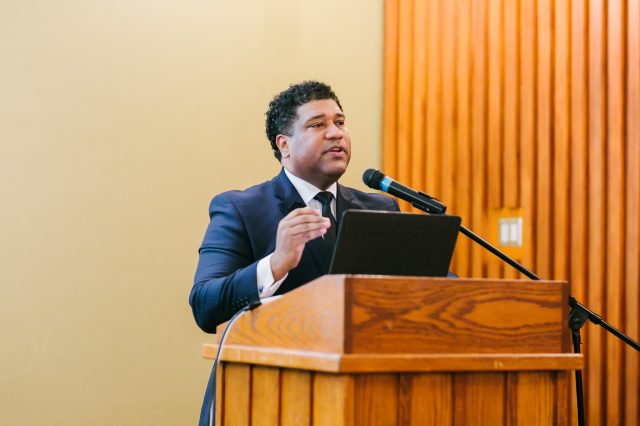
On November 14, Dr. Damon A. Williams gave his keynote lecture address on empowering leaders through inclusive excellence at Sage Bistro.
This lecture was the first in the Provost’s Distinguished Lecture Series on Race and Leadership, hosted by Dr. Andrew Szeri, Provost and Vice-President Academic, and Dr. Minelle Mahtani, Senior Advisor to the Provost on Racialized Faculty.
Dr. Williams, a recognized expert in the field of strategic leadership, has worked with over 1000 universities across North America on issues of leadership, diversity, and organizational change. A visionary and charismatic speaker, he engaged the crowd with witty humour and inspired the room by invoking the power of spoken word poetry throughout his address, aptly titled From Awareness to Action to Innovation.
Over the course of 40 minutes, the address highlighted the necessary relationship between institutional leadership and community, stressing that diversity leadership is in essence a conversation about humanity.

Accountability and vulnerability are imperative virtues to strategic movements, and when it comes to leadership, an organization ought to engage in equity, diversity and inclusive centred work while being respectful of the needs of its community.
“I believe in the great possibility that an agenda of inclusion can be one that embraces a broad conversation,” says Dr. Williams.
Education is about how we invest in others, and diversity is important because it highlights our complex interactions in higher education. More than social justice, diversity is key to innovation. Institutions such as UBC have the ability to reframe narratives, environments, and systems that birth inclusive excellence.
At the helm of this reframing are senior leadership officials who can foster cultures that uniquely define equity, diversity, and inclusion at UBC.
“It’s the senior leaders who allow for us to take the idea and strategically integrate within an institution,” stressed Dr. Williams.
Movements towards inclusive excellence, are, nonetheless, a collective effort of the entire community; fragmented departments and groups of people are not as powerful as when they act collectively.
“It’s everyday courage that drives a culture of inclusive excellence,” says Dr. Williams.
An emphasis on diversity in strategic leadership means creating spaces of belonging for people to be who they need to be to facilitate changemaking. This takes tremendous courage and vulnerability, but is consequently beneficial for the future of institutions striving towards inclusion.
“Some institutions, despite having a community of champions can’t seem to move the institution forward because the DNA of the institution is configured in a manner in which they’re institutionally frozen.” says Dr. Williams.
Changemaking involves integration, an awareness of “dynamic diversity DNA” and a transition from awareness to action to innovation. This can be achieved through consistent questioning, engaging with other innovators who have experience in similar fields, searching and reapplying solutions, a willingness to experiment with new ideas, and leading with courage, humility, and vulnerability.
At the end of this journey towards strategic diversity leadership, the institution will have affirmed identities, built a strong community, and cultivated leaders who further contribute to changemaking.
The Provost's Distinguished Lecture Series on Race and Leadership is created to foster holistic discussions on equity, diversity, and leadership at UBC. The series seeks to engage in critical conversations on strategic and diversity-focused initiatives on campus and inspire organizational change and leadership.
As part of the series, each term a speaker and expert in the field of equity, diversity and inclusion will be invited to UBC to explore issues of race and leadership in higher education. The event includes an introduction and moderation by the Provost and Vice President Academic, Andrew Szeri, and a public lecture led by the speaker.
Under the microscope: Examining EDI in and out of the lab
By Gabrielle Bonifacio, Communications Assistant (Work-Learn), UBC Equity & Inclusion Office

Anne Nguyen (left) and Dr. Brent Page (right), co-chairs of the UBC Pharmaceutical Sciences Equity Diversity and Inclusion Committee
When people think of labs, they envision white coats, thick-framed goggles and papers fraught with complicated scribbles. It is a place for exploration and experimentation; a site of discovery open to everyone in the business of scientific pursuit.
Yet that’s not what PhD student Anne Nguyen experienced in February 2018, when a senior colleague strode over to her puzzling chemistry reaction and made a sexist comment.
Dr. Brent Page, a colleague working on the same reaction, witnessed the incident and was both horrified and concerned. In fact, Page was so troubled by the remark that he checked up on her the day after. But for Nguyen, this was just one of many discriminatory comments she had received over the years.
“That situation happens so often as a scientist, as a student scientist,” Nguyen admits. “I’m just used to it.”
In fact, it was this particular incident which inspired the researchers to undertake the paperwork, organization and networking needed to form UBC Pharmaceutical Sciences’ Equity, Diversity and Inclusion Committee.
The 15-16 person team consists of members from all levels of UBC Pharmaceutical Sciences, each passionate about spreading awareness and creating a safe space in the building for people to learn about and act on issues concerning equity, diversity and inclusion.
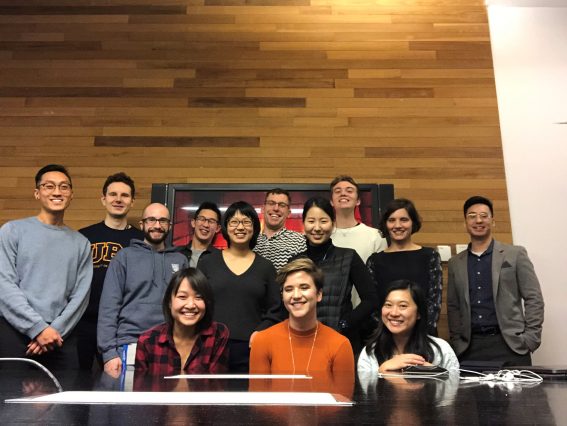
The UBC Pharmaceutical Sciences Equity Diversity and Inclusion Committee
Both chairs are quick to credit the team for their enthusiasm, noting that there continues to be visible changes underway – whether it be through using the building’s digital signage to highlight women’s history month to a task force rallying for more gender inclusive bathrooms.
Described as an advocacy committee, they utilize resources from UBC’s Equity & Inclusion Office to educate themselves and offer a space for people to turn to in the event of situations like Nguyen’s. Meetings occur monthly with new workshops and fresh ideas; a symposium highlighting diversity and inclusion in Pharmaceutical Sciences is yet another exciting projects in the works.
The co-chairs don’t shy away from sharing the committee’s origin story or the presence of sexism and discrimination in the lab. After all, it was what prodded Nguyen’s initial reaction to the comment; shock, followed by acceptance and the understandable instinct to let it slide. However, Page’s inquiry into her wellbeing sparked an epiphany.
“Brent reminded me just by him asking if I was okay, that no, it’s not okay,” Nguyen explains, recounting the incident. “Sometimes you need someone to validate that for you because you’ve been in that situation for so long.”
Nguyen hopes the committee will validate anybody’s situation.
“You can and you should stand up for yourself as a woman.”
The full support and interest they have received from the dean and their colleagues has helped, as have the priceless connections they’ve made along the way. Both express gratitude for the beautiful stories shared by members of their community and acknowledge the power that shared dialogue has in facilitating space for personal truths and vulnerability.
Regarding future initiatives, however, Nguyen isn’t focusing on the microscopic so much as she is on the larger picture. In five years, she says she hopes things will have progressed toward a “new normal”.
When asked for his advice, Page is firmly committed to changing the culture.
“Even if you don’t react in the moment…you can always give support, always stand up for what you value and try to make the world a better place.”
A change-making initiative in UBC’s Faculty of Pharmaceutical Sciences, this EDI committee is one example of people doing just that.
Comparing notes at the National Student Leadership Diversity Convention (NSLDC)
By Will Shelling, Policy and Research Assistant (Work-Learn student), UBC Equity & Inclusion Office
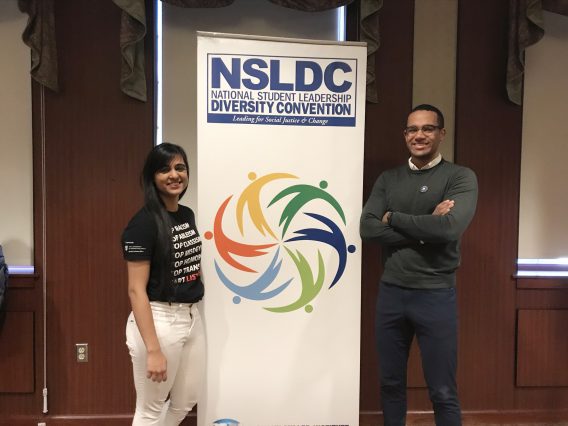
EIO student-staff members Nishthaa Lekhi (left) and Will Shelling (right) at the National Student Leadership Diversity Convention (NSLDC) in New York City this past November.
Touching down in New York City after about four hours of sleep and sitting in a seat that’s just slightly too small for you is a certain kind of situation one finds themselves in before going to their first academic conference as a student.
However, you end up being filled with excitement for the new experiences, knowledge, and people you’ll meet so it evens out with the lack of sleep. The National Student Leadership Diversity Convention (NSLDC) was a brilliant opportunity to compare notes with other student leaders across North America on issues of equity, diversity, and inclusion (EDI) that are affecting our campuses. Here’s what stood out for me the most:
Helping others requires taking care of yourself first
One of the things that stood out for me early in the conference is that discussions surrounding EDI are more common than I thought and they’re experienced by students across the continent, leading to the belief that others were struggling in similar situations I previously faced. A topic that we discussed was burnout culture in student activism and how to take care of yourself so that you can continue to look after others. The facilitator for this workshop openly called in folks who were doing too much and leading their physical and mental health to ruin, stating that “you need to look after yourself and manage your time properly, otherwise those folks won’t be able to be helped”. This was wildly impactful for me as someone who openly sidesteps their mental wellbeing in order to assist other people.
Being “good enough” amid “credential fatigue”
Another major topic that we discussed was the concept of credential fatigue for Black, Indigenous and Persons of Colour (BIPOC), and how in predominantly white institutions our identities are continually challenged. As the presenter discussed with us deftly, activist students of colour such as myself, continually fall prey to believing that despite whatever accolades we receive, internships we participate in, or things we decide to do, we’re unable to measure up against individuals who have historically benefitted from inclusion in these spaces, such as white, legacy, or students who have pre-exposure to University settings. For myself as an Activist Scholar of Colour, I’ve often fallen prey to this thinking. I certainly know I’m “good enough”; however, I still persist in reaching for another accolade, or another position to set myself apart when I don’t need to.
Where do we go from here?
Issues like credential fatigue, burnout, and this conception of self-worth require strongly built resilience to combat their insidious effects. We (and myself included), can fool ourselves into thinking that progress is a straight line and every misstep sets us back when really it’s a means for you to learn and grow. Credential fatigue is a unique ailment intimately tied to self-worth and we must begin to look at our persistence in these spaces as unprecedented and confronting years of processes that haven’t changed. We as scholars of colour are disrupting these systems and through supporting each other, we can begin to lessen the fatigue and maladaptive emotions others like us face.
Participating in this conference really highlighted the space that UBC has created through various initiatives and spaces such as the Inclusion Action Plan, Human Rights advising, and the Equity & Inclusion office, to codify a dedication to EDI at both UBC campuses.
Do I think that there are opportunities for universities to continually do better? Of course, I do. We need to push for more tangible changes through data-driven findings at our own institutions so that others can feel inspired to push for unique change, like creating a student diversity office or supporting widespread EDI initiatives on their own campuses.
How UBC Students Are Standing Up For Human Rights
By Gabrielle Bonifacio, Communications Assistant (Work-Learn), UBC Equity & Inclusion Office

Every year on December 10th we observe Human Rights Day to commemorate the UN’s adoption of the Universal Declaration of Human Rights in 1948. This monumental document states our inalienable rights as human beings regardless of race, colour, religion, sex, language, political or other opinion, national or social origin, property, birth or other status.
As this year’s theme is Youth Standing Up for Human Rights, we spoke with three students working at the EIO, Nishthaa Lekhi, Lilian Ordera and Will Shelling, to share their perspectives on their work and their experiences with standing up for human rights
How does your work support human rights?
Will: One of the areas of focus for my work this year is supporting racialized staff members.
Nishthaa: I think most of our work centers around awareness. Most of the time, it’s not that people intentionally want to make mistakes, but they do infringe on other peoples space and rights. Most of our work revolves around making other people aware of their space and most importantly, other people’s space.
Will: Everybody wants to be respected, included and cared about. How do we get there? That’s legitimately it.
Nishthaa: It’s quite simple, but people need to be made aware of it, whether it be through telling them how to respect each other’s space to making them aware of others’ differences. I normally joke with my friends that my work is to make people into good people. And a lot of it, sadly, is making people whose human rights or space has been infringed on, comfortable and creating positive or intentional spaces for them.
Most of the time, people are not even aware that their rights have been affected. It’s so normalized that if something happens to me, I’ll be like, ‘oh it’s not a big deal’, but actually, those are my human rights and I should stand up for them. It just trickles down to awareness.

Nishthaa Lekhi, EIO co-op student
What are some challenges you’ve faced at work or in everyday life, regarding human rights?
Lilian: The difficult thing is for most people to realize that they have been disrespectful to other people cause there’s a certain onus and personal responsibility to constantly be mindful. People don’t like to be uncomfortable.
Will: The hardest part of my job is making people realize the subtleties and insidiousness of racism, discrimination and harassment. Because a lot of it is just normalized in the way we do things and the way we work, right? Interestingly, some of my current research is centered on critical discourse analysis and how language is used to frame power dynamics. If we unlearn our language and take an active stance in understanding it, we can really work to support human rights.
Nishthaa: Instilling people with accountability is the hardest part of our jobs.
Lilian: It’s almost like you constantly have to be critical, you have to know how to ask white people these critical questions. How are you showing up for your students of colour or marginalized students in an institution such as UBC? In my experience when you’re talking about human rights, especially in an institution like UBC, a lot of professors are not mindful of that. Because I think it’s one thing to be like, ‘I’m not killing or hurting anyone, or saying racist slurs’. But it also shows up in how you are teaching, how you are talking about people when they are not present.
Nishthaa: It’s also about respecting spaces. Recently, we’ve been doing a lot of intentional spaces, like Get Connected with the Equity Ambassadors. Getting people aware of colonial histories, like how they impact the present and how we’re in a constant circle of perpetuating them through actions that we might not be aware of…I think that is the number one step we have to take for human rights.
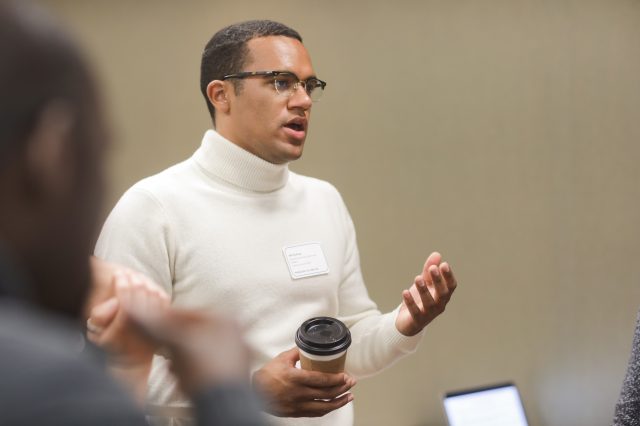
Will Shelling, Dialogue & Conflict Engagement Assistant
How do you stand up for human rights and against racism, hate speech, bullying and discrimination?
Will: I would say standing up for human rights is everyone’s duty in order to make sure that the people around us are able to receive their base needs of being respected, included and more importantly, cared for. I strongly believe that human rights is an everyday practice. It’s anything as small as not normalizing sexual violence, to overtly saying that BIPOC folks need to have codified spaces for them to participate in. It also goes into language like retooling and unlearning yourself so you can better support other people. It always starts with you, right? It’s both unlearning and learning and letting other people take the driver’s seat when they need to.
Nishthaa: We’re providing the tools and resources that people need to unlearn these [harmful] things. Most of what the equity facilitators do through the Positive Space campaign and the Through the Lens workshops is basically a deeper dive in helping people realize what they are doing. They help them unlearn or systematically deconstruct [problematic behaviour] so that they have a chance to learn and construct themselves again. Human rights is how you would treat yourself. It’s literally what your mom teaches you; just be kind, be respectful.
Will: Human rights are also intensely simple. It’s bodily integrity in regards to sexualized violence, it’s creating spaces for people to feel respected in. It’s about people’s base needs and how we fulfill them.