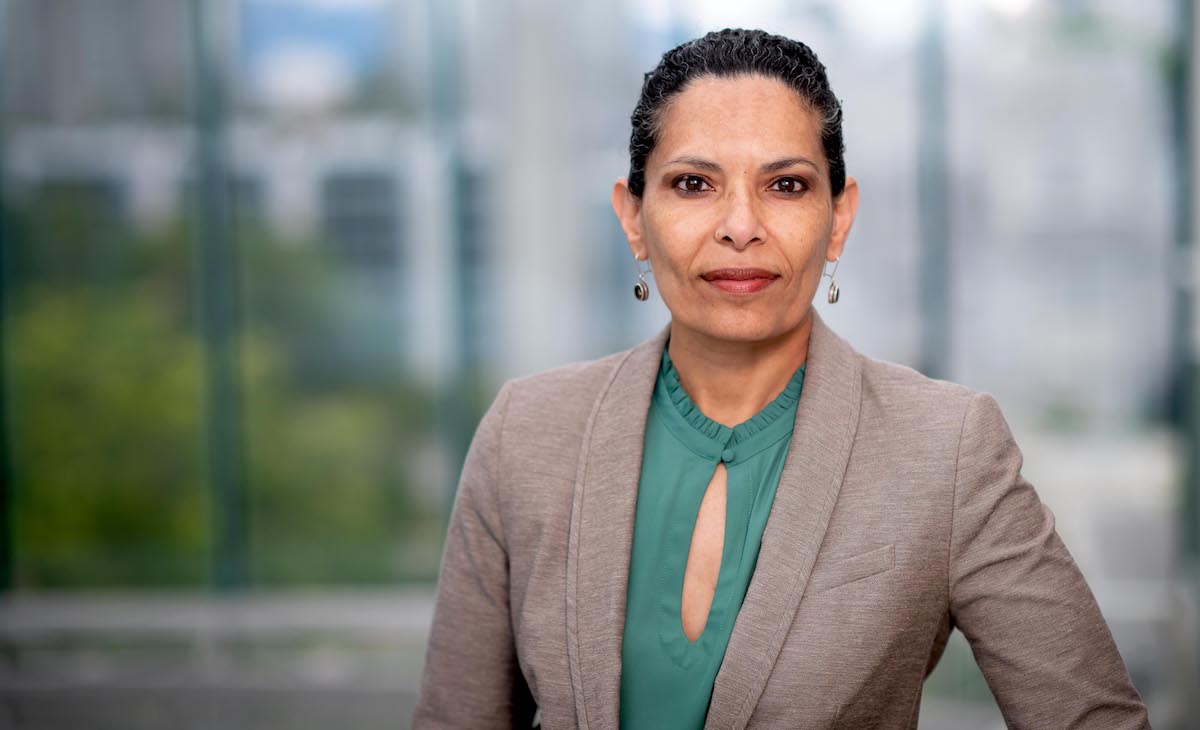
Centering care and supporting community-led affinity spaces in response to global events: A message from the AVP

Centering care and supporting community-led affinity spaces in response to global events: A message from the AVP

On September 27, a university statement was posted to express concern for the situation in Iran emerging after the death of Mahsa Amini, and to acknowledge the courage of those standing up for human rights and freedoms. As the situation unfolds, and thousands of change agents and allies continue to gather in Iran, in Canada, and around the world, it is clear that the impacts on the Iranian diaspora and international scholars and learners at UBC will be protracted and profound.

In addition to a symbolic statement of support from the institution, there is much we can do as individual colleagues and as a collective community to demonstrate substantive actions in support of members of impacted communities. In particular, unit/people managers and academic instructors are encouraged to review the Equity & Inclusion Office’s Guidelines for responding to collective tragedies and hateful incidents, which center an ethics of care. An ethics of care invites us to exhibit compassion towards and afford flexibility for impacted students, faculty, and staff in the classroom and the workplace in the aftermath of such tragic global events. This guidance document is relevant for other current, ongoing, and future global and local events that profoundly impact the campus community given our rich diversity and our deep value for human rights and freedoms.

Among the ways to make a substantive difference to the experiences of impacted communities is to support community-led affinity spaces. Already, a number of such initiatives have been organized at UBCO to support Iranian communities. In the coming days and weeks, the UBC Iranian Professionals Network and the UBC Persian Club will be co-leading the curation of an on-site gathering and co-convening other spaces at the Vancouver campus for Iranian students, faculty, and staff. The goal is to offer safe spaces for connection, to give and receive community support, and to counteract feelings of isolation and helplessness. The Equity & Inclusion Office is pleased to assist in raising awareness for and helping to support this community-led initiative. More information about the gatherings will be forthcoming.

Finally, to promote respect and inclusion, it is important to recognize that the UBC Iranian community is diverse, including across ethnic and religious identity. Among those who identify as Muslim, there is a diversity of ways that individuals may choose to present and practice their Islamic faith, spirituality, or cultural identities. None of these should be implicitly conflated with support for the Iranian government’s regime, including a community member’s right and choice to wear hijab. More broadly, building one’s cultural competency and global literacy can enhance intergroup relations in the aftermath of these events. Community members are encouraged to broaden their sources of information and to take the initiative to learn about the relevant social, political, and historical contexts surrounding such global events. The UBC library is one great resource for such learning.

Sincerely,

Arig al Shaibah, Ph.D.
Associate Vice-President, Equity & Inclusion


“I raise my voice not so I can shout, but so that those without a voice can be heard. We cannot succeed when half of us are held back.” ~ Malala Yousafai


“A world full of empowered women isn’t one where men are marginalized. It’s a world where everyone thrives.” ~ Purnima Mane


Resources for community members seeking support:

Students

Students Assistance Program – a free 24/7 confidential wellness resource for crisis, grief, and trauma counselling:

A variety of health and wellbeing resources, services and programming is also available to UBC Vancouver students at students.ubc.ca/health and to UBC Okanagan students at students.ok.ubc.ca/health-wellness/.

UBC Persian Club – a non-profit student organization and social hub for UBC Iranian community and Iranian-related activities.
Website: facebook.com/ubcpersianclub/
Email: president@ubcpc.com


Faculty and Staff

Employee and Family Assistance Program – a confidential and voluntary resource providing professional and emergency counselling services and additional support via phone, video, web or mobile app.

All mental health resources, including access to UBC’s Extended Health Benefits Plan, can be found on the HR website: hr.ubc.ca/health-and-wellbeing/mental-health.

UBC Iranian Professionals Network
Website: equity-theiranianprofessionalnetwork-2022.sites.olt.ubc.ca


All community members

Healing in Colour has an extensive list of racialized counsellors
Website: healingincolour.com/about

Orange Shirt Day

New case study library offers examples of inclusion in action

A new case study library hosted by the UBC Equity & Inclusion offers a promising and growing list of examples of how departments and units are advancing equity, diversity, and inclusion (EDI) across UBC.

The library has been launched as a way to support UBC units and departments by providing some practical examples of how others across the university are advancing EDI. The library seeks to draw out transferable lessons-learned which units might be able to apply in their own contexts, even when working on different initiatives.

The initial six case studies are drawn from presentations that have been made at past meetings of the EDI Action Network. They were originally selected for presentation to the network as representative of the breadth of different types of initiatives that are advancing EDI and to show how units and departments have worked proactively to identify what initiatives are most relevant and useful in their own contexts.

Some of the case studies demonstrate how the units involved leveraged Activating inclusion Toolkit tools and guides, and all case studies contributed to specific Inclusion Action Plan goals, including: recruitment, retention, and success, learning, research and engagement, and system change.

The following case studies have been published to date:

EIO will continue to add examples of promising and inspirational efforts to the case study library. The case studies will aim to represent efforts across each of the IAP goals.

As we continue to refine how the case studies are structured and presented, let us know if you have suggestions, ideas or other feedback.

If you are interested in submitting a case study for consideration, please ensure your example contributes to one or more Inclusion Action Plan goals.

To learn more, share your feedback, or express interest in showcasing your project, please email us at info@equity.ubc.ca.

Actioning UBC’s commitments to equity and anti-racism: A message from the AVP

Dear UBC Community Members,

As the fall term begins, it is an opportune time for me to update the community about UBC’s progress on its commitments to equity and inclusion.

Since my term as Associate Vice-President, Equity and Inclusion began on July 1, 2022, I have been meeting with key campus partners and affinity groups to learn about what has been accomplished and where there are opportunities for further achievement. While I will continue these meetings through September, it is abundantly clear to me that a remarkable amount of effort and expertise has been committed by students, faculty, and staff to develop a comprehensive set of distinct yet complementary plans and recommendations for institutional transformation and systems change. These include the following:

  • The 2019 Inclusion Action Plan (IAP) and the 2020 Indigenous Strategic Plan (ISP) remain foundational strategic documents, developed to meet inclusive excellence and Indigenous reconciliation commitments articulated in the University’s 2018 – 2028 Strategic Plan: Shaping the Next Century.
  • The 2019 Employment Equity Plan and 2019 CRC EDI Action Plan also remain particularly relevant strategic documents to help achieve UBC’s obligations and aspirations to advance equity in employment systems and in the processes for nominating and selecting research chairs.
  • The 2022 Task Force on Antiracism and Inclusive Excellence (ARIE) Final Report provides a nuanced set of recommendations to guide efforts to address systemic racism while maintaining a commitment to intersectionality in the pursuit of equity and inclusive excellence – these recommendations not only support UBC’s pledge to the Scarborough Charter [external link] to address anti-Black racism and promote Black flourishing, but they also invite transformative thinking and action towards the university’s broader racial equity and social justice goals.

Additionally, the following plans and recommendations are nearing completion:

Now, to guide the UBC community through a more comprehensive, cohesive, and coordinated phase of implementation, I am pleased to announce that a Strategic Equity and Anti-Racism (StEAR) Framework has been developed. In the coming weeks, the EIO will launch a new online platform to host information about the emerging StEAR Framework and regular implementation progress reports.

In the meantime, you can read about ongoing equity initiatives in various annual reports prepared by the EIO, and you can preview a sampling of some activities the EIO has contributed to in support of UBC’s antiracism commitments and that have been underway since the 2021 update on institutional anti-racism actions was shared with the community. Many more initiatives are currently underway across UBC. An inventory of cross campus initiatives will soon be conducted to enable reporting on the more robust list of initiatives being undertaken.

While the EIO will oversee UBC’s institutional commitments to equity and anti-racism broadly, the Indigenous Guiding Network will continue to oversee UBC’s specific commitments to Indigenous rights and reconciliation. I look forward to continued consultation and coalition-building with the Network to support and elevate Indigenous priorities.

As I have a pan-institutional mandate, I will be working collaboratively with student, faculty, and staff partners and champions across campuses, and especially closely with the Associate Provost appointed as the UBCO champion for inclusion, diversity, equity, and anti-racism (IDEA) to best meet the local needs of the Okanagan campus community.

I am immensely grateful to all community members who have contributed to our progress to date. I look forward to renewing our commitments and continuing our journey to actioning these over the next several years.

All members interested in contributing to these renewed efforts are most welcome to contact me.

Sincerely,

Arig al Shaibah, Ph.D.
Associate Vice-President, Equity & Inclusion